


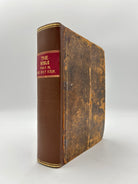
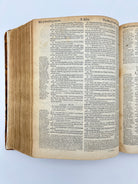
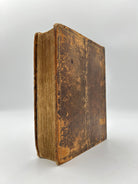
Geneva Bible “The Goose Bible” 1599
Couldn't load pickup availability
6B Geneva Translation. “The Goose Bible” Geneva: L. Thomson, 1599
Description
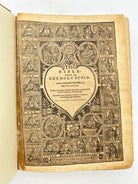
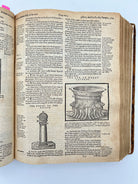
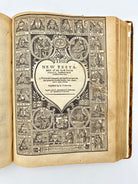
The Geneva Bible, first published in 1560, was an English translation produced by Protestant scholars who had fled to Geneva during the reign of Mary I, and it became one of the most influential English Bibles of the Reformation era. Notable for its clear, vigorous English and its extensive marginal notes reflecting Reformed theology, it was the first English Bible to use verse numbers throughout, making it especially accessible for study and preaching. The Geneva Bible was widely read in England, Scotland, and early colonial America and was favored by figures such as Shakespeare, John Knox, and the Puritans, even after the later publication of the King James Version. Many editions were distinguished by woodcut illustrations, including dramatic title-page scenes, biblical maps, genealogical charts, and narrative images that helped readers visualize scripture and reinforced Protestant teaching. Over time, these woodcuts became an important part of the Bible’s appeal, blending art, education, and theology, and they remain highly valued by historians and collectors as examples of how text and image worked together to shape early modern religious culture
The “Goose Bible” is a famous nickname for a 1560 edition of the Geneva Bible, and the name comes from a distinctive woodcut on the title page depicting a goose. In the illustration, a large goose appears at the center, often interpreted as a symbol of vigilance or watchfulness—qualities associated with study and spiritual alertness—or possibly as a playful emblem inserted by the printers to catch the eye of readers. The nickname stuck over time because the image was so prominent and unusual compared with other Bible editions of the period. Beyond its whimsical nickname, the Goose Bible was significant for including the Reformed marginal notes and verse numbers that made the Geneva Bible revolutionary in English-speaking Protestant communities, and its woodcuts, including the goose, helped convey biblical narratives and theological ideas visually, reinforcing the connection between scripture, study, and daily life.
Notes
Beautiful title page wood cuts and many wood cuts throughout, does not contain the Apocrypha, complete set of Geneva maps. The title page contains the device of a goose at the foot., new spine, rubbed four corners, intact, fine condition.